
AI can turn a content brief into a complete article in minutes. But a good content system should also help writers develop their skills and make the workflow less dependent on any one person.
The idea for this article came to me while I was designing the editorial system for the website you're reading. I wanted a workflow that would let me take a passing thought and develop it into a complete article with the help of AI.
But as I worked through the steps involved in producing an article, I found myself asking questions that had less to do with organizing a workflow.
What frustrates me about the way AI is used in content production? What makes writing worth doing? And what kind of content professional do I want to become?
What began as an idea for an article about a workflow turned into a bigger question: How do you build a content system that runs efficiently while helping its writers become better at what they do?
Writing faster doesn't necessarily make you a better writer
There's a convenient way to use AI: give it a brief, ask it to write an article, make a few edits, and use the result.
I have no objection to this approach when the writer has done the research, understands the subject, knows what argument to make, and has put together a solid brief. Delegating the actual drafting to AI is perfectly reasonable.
What concerns me is how easily AI allows writers to skip the stages that deserve their attention and thought.
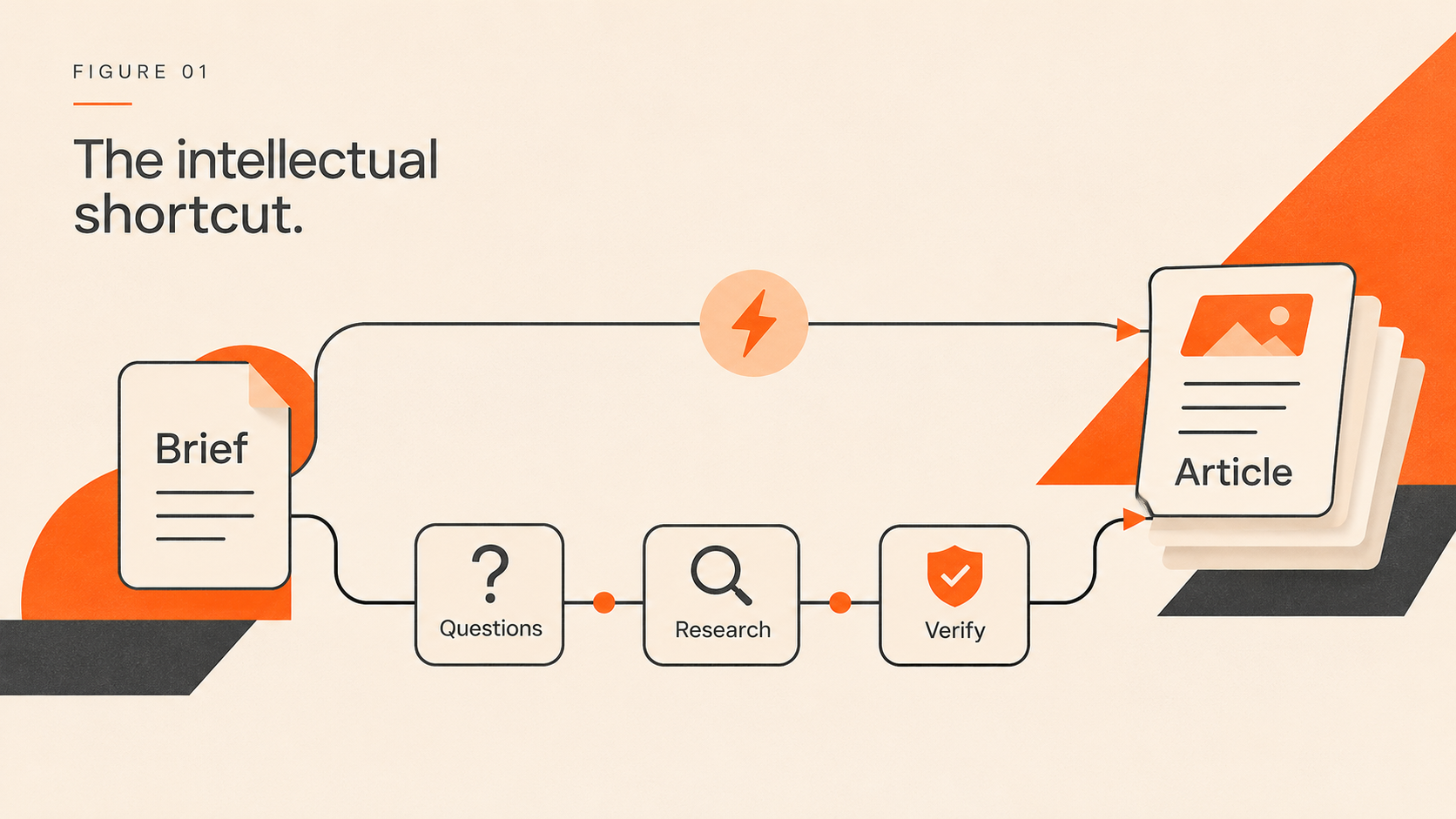
In 2023, Shakked Noy and Whitney Zhang published an experimental study on the productivity effects of generative AI in Science. Across the professional writing tasks studied, using ChatGPT reduced completion time by an average of 40% and increased output quality by 18%.
Those are substantial gains. But the study doesn't answer another question I care about: Does the writer become more capable after completing the work with AI?
A study presented at CHI 2025, based on a survey of 319 knowledge workers, found that greater confidence in AI's ability to perform a particular task was associated with less self-reported engagement in critical thinking during that task.
The researchers also observed a shift in critical thinking toward activities such as verifying information, integrating AI-generated results, and overseeing tasks. This doesn't establish that AI is causing people to lose their ability to think. It does suggest that how we use the tool relates to how we exercise that ability.
For me, the act of writing has value in itself. Trying to explain something to another person can reveal how little you actually understand about it. An argument that initially seems convincing may turn out to rest on weak evidence once you try to defend it.
Making those discoveries is part of what makes writing worthwhile.
If AI helps me ask better questions, find research I wouldn't otherwise have encountered, or spot contradictions in my reasoning, I want to use it more. But if an article earns plenty of praise and the person whose name appears on it understands the subject no better than before, I wouldn't call that a complete success.
Content professionals can become their own bottlenecks
Writing faster also leaves another problem unresolved: the performance of the content production process as a whole.
Imagine a marketing team that takes two hours to write an article but waits three days for a manager to approve it. If AI cuts the writing time to thirty minutes, the team still faces the same three-day wait. Producing more drafts might simply leave the manager with a longer approval queue.
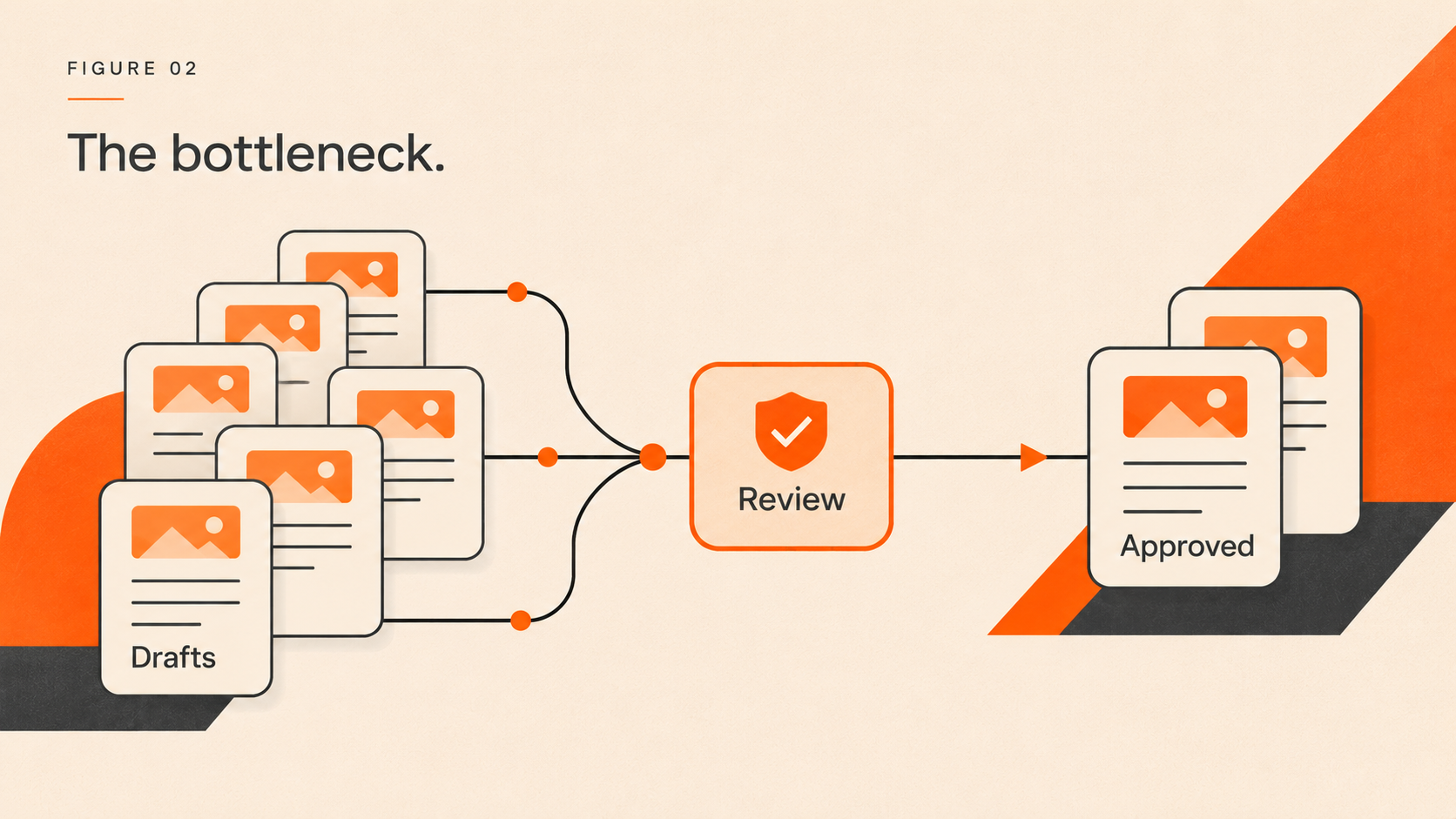
In operations management, Eliyahu M. Goldratt's Theory of Constraints focuses on identifying the constraint that limits the performance of an entire system. Improving other stages of a process may do little for overall performance if the actual constraint remains unresolved.
Rather than concentrating on how to write a better article, I'm more interested in why a team struggles to maintain consistent content quality. Does it lack research material? Are its editorial standards unclear? Does it spend too much time fixing problems that could have been prevented with a better brief?
And if every one of those problems requires an experienced person to step in, what happens when that person leaves?
I want to become someone who can identify and resolve those bottlenecks. I don't want to become another one myself.
If a manager has to revise every headline, opening paragraph, and awkward sentence to bring content up to standard, they may not have found a way to pass on some of their editorial expertise to the rest of the team.
That's what draws me to content systems design. The goal is to build workflows in which knowledge, working methods, and quality standards can be understood and applied by others, rather than existing primarily in the mind of the person who designed them.
Three questions for evaluating a content system
Introducing AI into a workflow isn't enough to solve these problems.
A meta-analysis of 106 experimental studies, published in Nature Human Behaviour in 2024, found that humans and AI working together do not always perform better than the stronger of the two working alone.
The results also vary according to the type of task and the relative capabilities of humans and AI. How we divide the work between them matters.
When designing an AI-assisted content system, I propose evaluating it across three dimensions.
Output quality. Is the content accurate and useful, and does it help readers solve their problems?
Capability development. Over time, are writers gaining a deeper understanding of their subjects, improving their judgment, or learning better ways to work?
System independence. Can the workflow maintain its quality standards when handed over to other suitably qualified people, without relying too heavily on any one individual?
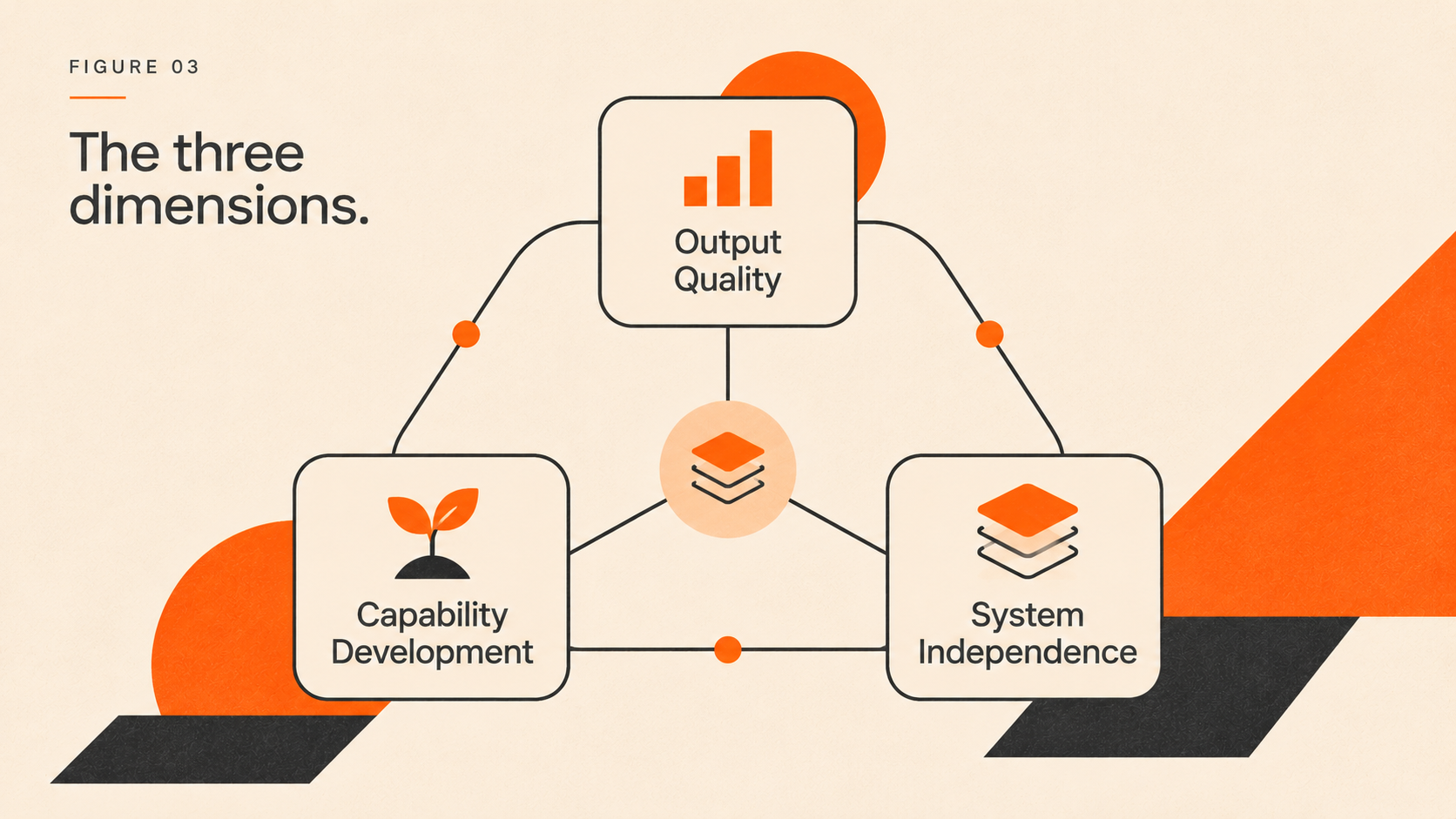
These three dimensions don't always reinforce one another.
A writer might learn a great deal by researching every aspect of a subject, but the time invested may be disproportionate to the value the article offers its readers.
A manager might maintain high standards by personally reviewing every detail, while inadvertently making the entire team dependent on their availability.
A highly automated system might produce large volumes of content in a short time, but without adequate verification, writers may struggle to control its quality or take responsibility for what gets published.
I don't have a universal formula for balancing these three dimensions. Time and cost remain practical constraints when trying to improve them. What I can do is account for all three when designing the system, rather than judging its performance solely by the number of articles produced each month.
How I'm designing my editorial workflow with AI
I'm building the editorial system for norrisnguyen.com around these principles. The intended workflow takes each Insights article through eight stages:
- Idea exploration. Start with an observation, a problem encountered at work, or a question I'd like to investigate.
- Dialogue and critical examination. Work with AI to explore different perspectives, identify things I haven't considered, and challenge initial assumptions.
- Research and verification. Find relevant material, check sources, and determine which claims have sufficient evidence.
- Thesis and brief. Establish what the article argues, who it's for, what evidence supports it, and where its scope ends.
- Draft development. Use AI to help write the article based on the agreed brief.
- Editing and quality review. Read, challenge, and revise the draft while checking its reasoning, factual accuracy, and voice.
- Bilingual adaptation. Develop a second language version that reads naturally and serves its intended audience.
- Publication preparation. Finalize the content, images, and SEO elements, and check how the article appears on the website.
I don't expect these stages to follow a rigid sequence. A new discovery during research might lead me to reconsider the thesis. A problem in the draft might reveal that the brief wasn't clear enough in the first place.
What matters more is deciding which tasks AI can handle independently and which decisions require the author's involvement.
The system has four approval gates. Each requires me to answer a question before moving forward.
| Approval gate | Question to resolve |
|---|---|
| G1: Topic | Is this subject genuinely worth writing about? |
| G2: Brief | Are the argument and supporting evidence sufficient to develop an article? |
| G3: Editorial quality | Is the article accurate, convincing, and faithful to my perspective? |
| G4: Publication | Am I ready to take responsibility for what is about to be published? |
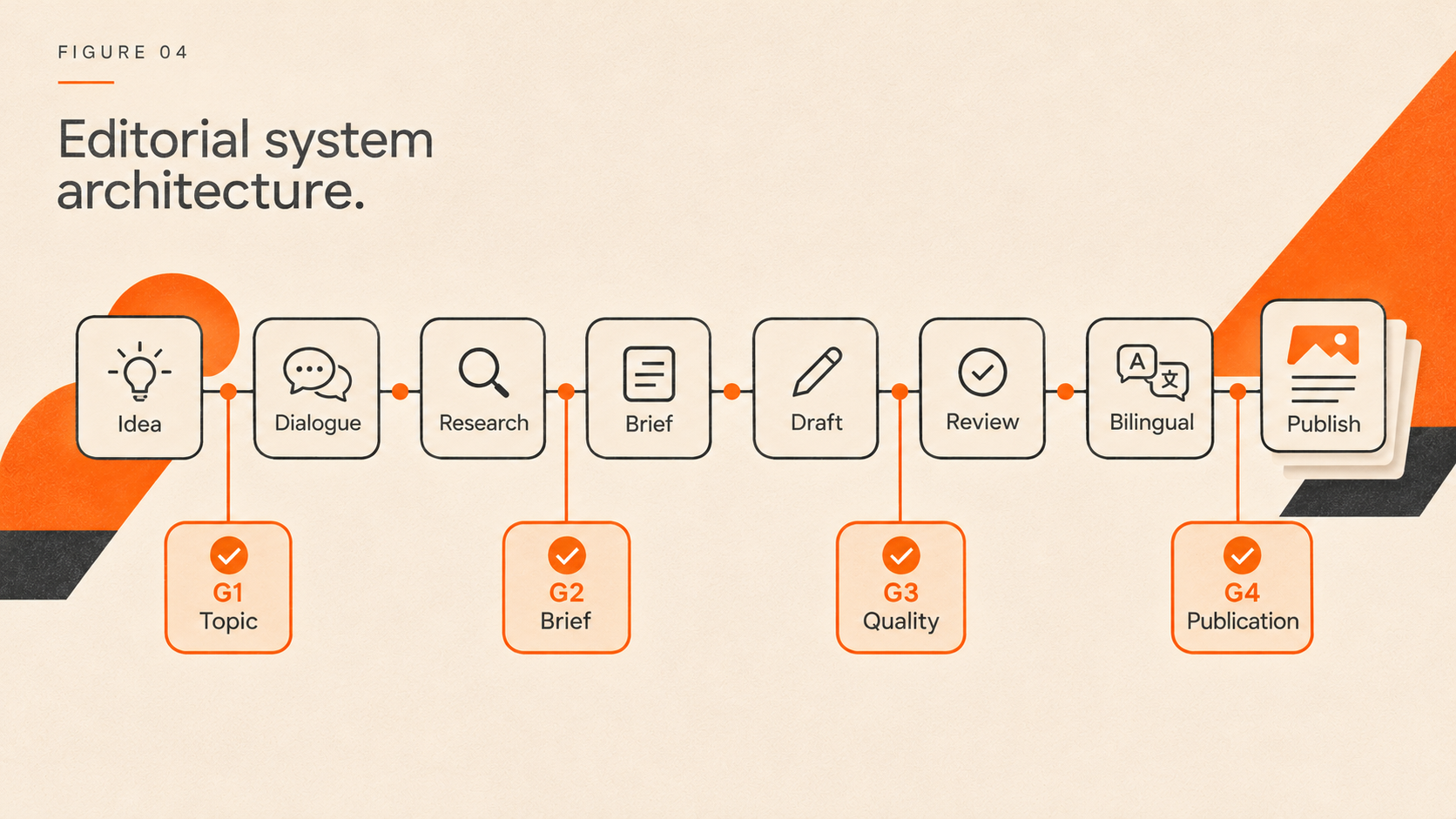
Between these gates, AI can handle many tasks without requiring my approval at every step. It can find sources, propose structures, identify errors, and prepare material for publication.
Making the workflow transferable also means documenting editorial standards, supporting evidence, and the reasoning behind important decisions. If everything still depends on my memory or personal judgment, someone else will have difficulty taking over.
For articles involving complex arguments or numerous important factual claims, the system includes an additional review separate from the drafting process. The article is evaluated against its thesis, sources, and editorial standards, without relying on the full conversation that produced it.
The purpose is to reduce the influence of assumptions and decisions made during drafting. This makes the review independent of the original drafting context, even when the underlying AI model remains the same.
For simpler, lower-risk articles, an AI-assisted quality check followed by the author's review may be sufficient.
The system itself is still being implemented. I don't yet have enough data to say how much time it saves, how much it improves content quality, or whether it can be successfully handed over to someone else.
Those are questions I intend to investigate as I continue running the website.
When examining your own content workflow, consider three questions.
Which stages consume time without contributing much to content quality? Which help writers understand their subjects more deeply? And which decisions still depend too heavily on one person?
You might discover that the next thing worth improving isn't your writing prompt. It might be the way your team acquires knowledge, develops briefs, or shares and applies editorial standards.
These are the kinds of problems I want to use AI to solve. And I'd be pleased if, one day, a system I've designed could run well without my direct involvement at every stage.
But as long as my name appears on an article, I want to understand what it says, know why I agree with it, and be able to take responsibility for what I've published.
That's the part of the work I don't want to automate.